
Organic Maps Versus Paid Ads: Where Local Leads Come From
A homeowner with a leaking water heater is not researching marketing channels. They are searching “plumber near me,” checking the map results, and calling someone who looks available and trustworthy. That is the real decision behind organic maps versus paid ads: which channel puts your business in front of high-intent local customers when they need help.
For most service businesses, the right answer is not choosing one forever. It is knowing what each channel does well, where it falls short, and how to use both without wasting money.
Organic Maps Versus Paid Ads: The Real Difference
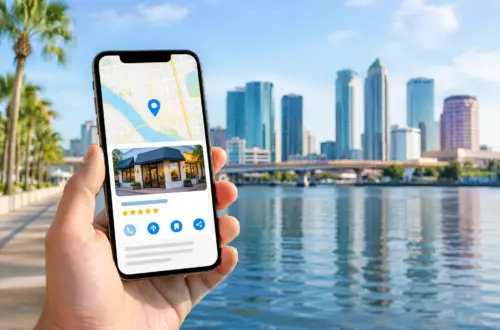
Organic Maps visibility means showing up in Google’s map results, often called the local pack. These are the business listings that appear with a map, star ratings, phone numbers, hours, and directions. Your Google Business Profile plays a major role here.
Paid ads are the sponsored results that can appear above maps and regular search results. You pay when someone clicks. If you run a Google Ads campaign for “AC repair Tampa,” your business may show up quickly, even if your website is not ranking well yet.
The difference is simple. Maps rankings are earned over time. Paid ads are bought for immediate visibility.
Both can produce calls. But the quality, cost, speed, and long-term value are different.
Why Google Maps Leads Often Convert Better
Map searchers usually have a clear local need. They want a dentist nearby, a roofer who serves their neighborhood, or an HVAC company that can get there today. They are not casually browsing. They are comparing a short list and preparing to call.
A strong map listing helps them make that choice fast. Your business name, rating, review count, photos, service details, service area, hours, and recent updates all affect trust. If your profile is incomplete or has old information, you can lose the call before a customer ever visits your website.
Maps also carry built-in local proof. A business with 80 recent reviews and a clear service description often feels safer than an unfamiliar ad. That does not mean ads cannot work. It means your map presence has to look credible when people compare options.
For a local business, Google Maps can keep generating leads without a charge for every click. That is the biggest long-term advantage. Once your profile and local SEO foundation improve, each new call is not tied to a daily ad spend.
The trade-off is time. You cannot fully control when Google moves your listing up. In competitive Tampa Bay service areas, solid map rankings require consistent work: profile optimization, accurate business details, review growth, local relevance, and a website that supports the services and locations you want to rank for.
When Paid Ads Make More Sense
Paid search is useful when you need leads faster. A new plumbing company, a contractor entering a new service area, or an HVAC company heading into peak summer demand may not have months to wait for organic rankings.
Ads let you target the services that matter most. You can focus on terms such as “emergency plumber,” “roof repair,” or “same-day AC repair.” You can choose the cities you serve, schedule ads during business hours, and pause campaigns when your team is booked.
That control is valuable. So is speed. A well-built campaign can begin bringing calls soon after it launches.
But paid ads are not a shortcut around a weak sales process. If your landing page is slow, your phone is not answered, or your form sits untouched for two days, you will pay for leads that go nowhere. The ad gets attention. Your business still has to convert it.
Paid ads also get more expensive when several local companies chase the same urgent searches. If you only use ads, your lead flow can disappear the moment you pause the budget. That makes paid search a rented channel, not a long-term asset.
The Question Is Not Which One Is Better
The better question is what your business needs right now.
If calls are inconsistent and you need booked jobs this month, paid ads can create immediate demand. If you already have some referrals, a decent reputation, and a service area you want to own over time, Google Maps and local organic rankings should be a priority.
For many businesses, the strongest setup is simple: use ads to capture urgent opportunities now while building maps visibility that lowers your dependence on ads later.
A roofing company may run paid ads after a major storm because demand spikes fast. At the same time, it should build its map presence for searches like “roof repair near me” and “roofing contractor in [city].” The ads handle the immediate window. Local SEO creates a steadier pipeline when the storm is gone.
A dentist may take a different approach. If the office has strong reviews, an optimized profile, and a well-built new patient page, organic maps may carry much of the load. Paid ads can then focus on high-value services or slower appointment periods instead of trying to buy every new patient.
What Needs to Be in Place Before You Spend More
Do not send more traffic to a business that is hard to contact. Whether a lead comes from Maps or an ad, the basics determine whether it turns into revenue.
Your Google Business Profile should show the right primary category, accurate service areas, current business hours, clear services, real photos, and a steady flow of genuine reviews. Your website should make it easy to call or request service from a phone. Each important service should have its own focused page, not a vague list buried on the homepage.
You also need lead tracking. At minimum, know how many calls, forms, booked appointments, and closed jobs come from each source. A campaign that produces many clicks but few qualified calls is not working. A map listing that drives fewer calls but produces larger jobs may be more valuable than it first appears.
Speed matters after the lead comes in. For home service businesses, the first company to answer often wins. For real estate agents, dentists, and chiropractors, fast follow-up can be the difference between a booked appointment and a lead that disappears. Automated text responses and follow-up reminders can help, but they should support real human contact, not replace it.
A Practical 90-Day Approach
Start by fixing the foundation, then add demand where you need it. Over the next 90 days, focus on four actions:
- Fully optimize your Google Business Profile and confirm that every business detail matches your website and directories.
- Build or improve service pages for the work that produces the best jobs in the cities you actually serve.
- Ask for reviews consistently after completed jobs, with a simple process your team will follow.
- Run tightly targeted paid search only for services, locations, and hours where you can answer the phone and fulfill the work.
Avoid broad campaigns that send clicks from outside your service area or for jobs you do not want. Avoid chasing rankings for every city in the state when your crews can only serve a defined radius. Local marketing works better when it is specific.
Review results every month. Look beyond impressions and clicks. Ask how many qualified phone calls came in, how many appointments were booked, and what revenue those jobs produced. That is the data that should guide your next move.
Build the Channel You Can Keep
Paid ads can fill gaps quickly. Google Maps rankings can become one of your most reliable sources of local leads. Neither fixes poor service, weak reviews, or missed calls. Both work best when the customer journey is clear from search to booking.
If you need faster lead flow, use paid ads with a focused budget and tight tracking. If you want more stable demand over the next year, invest in your map listing, reviews, local service pages, and follow-up process. Start with the services that make your business the most money, make it easy for customers to reach you, and give every lead a reason to choose you right away.


You May Also Like

Small Business Call Tracking Guide for More Leads
Tampa Google Business Profile Optimization