Lead Generation That Brings More Service Calls
A homeowner with a leaking water heater is not browsing for ideas. They are looking for a plumber now. The same is true for a homeowner with a broken AC unit, a patient with tooth pain, or a seller who needs a real estate agent. Good lead generation puts your business in front of these people at the moment they are ready to call.
For local service businesses, more leads do not come from posting more often or chasing every marketing trend. They come from a simple system: show up when people search, make it easy to contact you, and respond before the lead calls someone else.
What Lead Generation Should Do for Your Business
A lead is not just a website visitor or someone who sees your business name. A real lead takes an action that can become a job: a phone call, a form submission, a text message, or a booked appointment.
That distinction matters. A roofing company does not need thousands of visitors from across the country. It needs homeowners in its service area searching for roof repair, roof replacement, or storm damage help. A dentist needs local patients looking to schedule care, not people reading a general article about brushing techniques.
The best lead generation system focuses on high-intent searches. These are searches that include a service and location, such as “AC repair Tampa,” “emergency plumber near me,” or “chiropractor in Clearwater.” The person searching already has a need. Your job is to make your business the clear, easy choice.
This also means measuring the right results. Track calls, form submissions, booked estimates, and completed jobs. Rankings and website traffic can be useful signals, but they do not pay the bills on their own.
Start With the Places Customers Already Search
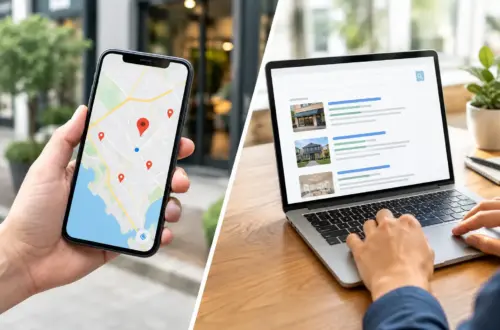
For most local businesses, Google is the starting point. When someone needs a service quickly, they usually search Google, check the map results, read a few reviews, and call one or two businesses. If you are not visible there, you are handing those calls to companies that are.
Your Google Business Profile needs accurate categories, services, business hours, service areas, photos, and a working phone number. It also needs regular reviews from real customers. A profile with strong reviews and clear service details gives people a reason to call before they ever visit your website.
Do not treat your profile as a one-time setup. Check it monthly. Make sure holiday hours are correct. Add photos from recent jobs. Review the services listed. Answer customer questions when they appear. Small gaps can cost you calls, especially when a customer is comparing several nearby businesses.
Your website should support your Google visibility, not get in the way. Each core service needs its own clear page. An HVAC company may need separate pages for AC repair, AC installation, heating repair, and maintenance. A visitor should not have to hunt through a long homepage to confirm that you handle their problem.
Each service page should answer four questions quickly: What do you do? Where do you do it? Why should someone trust you? How do they contact you now? Put the phone number and request form where people can see them without scrolling through a wall of text.
Build Pages Around Real Service Searches
Location pages can help when they represent real service areas and provide useful information. If you serve Tampa, Brandon, Clearwater, and St. Petersburg, customers in those areas may search differently. A focused page can help Google and the customer understand that you serve that location.
But do not create dozens of nearly identical city pages with only the city name changed. Thin pages rarely help long term, and they create more work to maintain. Start with your highest-value services and the areas that consistently produce jobs.
Make Every Visit Easy to Turn Into a Call
A website can rank well and still lose leads. This happens when the next step is unclear, the form is too long, the site is slow on mobile, or the business gives people no reason to act now.
Your main call to action should match the service. For urgent work, use language like “Call Now for Emergency Service” or “Request Same-Day Service.” For higher-consideration services, such as roof replacement or cosmetic dentistry, “Schedule a Free Estimate” or “Book a Consultation” may make more sense.
Keep forms short. Name, phone number, email, service needed, and a message field are usually enough. Every extra field creates another reason for a customer to quit. If you need more details, collect them after your team has made contact.
Trust also affects conversion. Show recent reviews, licenses or certifications that matter in your trade, service area details, and photos of real work. Avoid stock-heavy pages that look like every other contractor site. Customers want to know there is a real local business behind the phone number.
Mobile matters most. Many service searches happen from a phone while someone is standing in a hot house, looking at a leak, or sitting in a parking lot between appointments. Your site should load quickly, the phone number should be tappable, and the contact button should be easy to find.
Speed to Lead Is Where Many Businesses Lose Money
Getting the lead is only half the job. The follow-up process decides whether that lead becomes a booked appointment.
If a customer fills out a form at 10:15 a.m. and hears back at 4:00 p.m., they may have already booked another company. For urgent services, aim to respond within minutes. For estimate requests, a fast response still signals that you are organized and ready to help.
Set up immediate notifications for every call, form, and text inquiry. If you cannot answer every call live, use a clear voicemail greeting and a process for returning missed calls quickly. A missed-call text can also let the customer know you received their call and will respond soon.
Automation can help here without making your business sound robotic. A simple system can send a confirmation text after a form is submitted, notify the right team member, and remind customers about appointments. Your staff should still handle the actual conversation. Automation handles the delay, not the relationship.
Track where every lead came from. Ask callers how they found you, and use call tracking or form source tracking where possible. If Google Maps produces booked jobs and a different channel produces only low-quality inquiries, you know where to focus your time.
Fix the Gaps Before Spending More on Traffic
Many owners assume they need more leads when the bigger issue is lead leakage. They are paying for visibility but losing opportunities through slow response times, weak pages, unanswered calls, or unclear follow-up.
Start by reviewing the last 30 days. How many calls came in? How many forms were submitted? How fast did your team respond? How many leads became booked appointments? How many appointments became paying jobs? These numbers show the actual bottleneck.
For example, a plumbing company may receive 40 inquiries in a month but book only 12. Before trying to generate 80 inquiries, look at the other 28. Were they missed calls? Did the office call back? Did customers receive an estimate? Did anyone follow up after the estimate was sent?
A better process can create more revenue from the leads you already have. Then, when you improve rankings or invest in more local visibility, your business is ready to handle the extra demand.
A Simple Lead Generation Plan to Run This Month
Pick one high-value service first. For an HVAC company, that may be AC repair. For a roofer, it may be roof replacement. For a chiropractor, it may be new patient appointments. Improve the Google Business Profile, service page, call to action, and follow-up process around that one service before spreading your attention everywhere.
Next, set a weekly habit. Check new reviews, missed calls, form response time, booked appointments, and the pages bringing in inquiries. This does not need to take hours. It needs to happen consistently.
The goal is not more marketing activity. The goal is a reliable path from a local Google search to a real conversation with your business. When that path is clear, fast, and easy to trust, more of the customers already looking for your service will choose to call you.


You May Also Like

What Is Local SEO and How Does It Get Calls?

Why Are Calls Not Converting Into Booked Jobs?