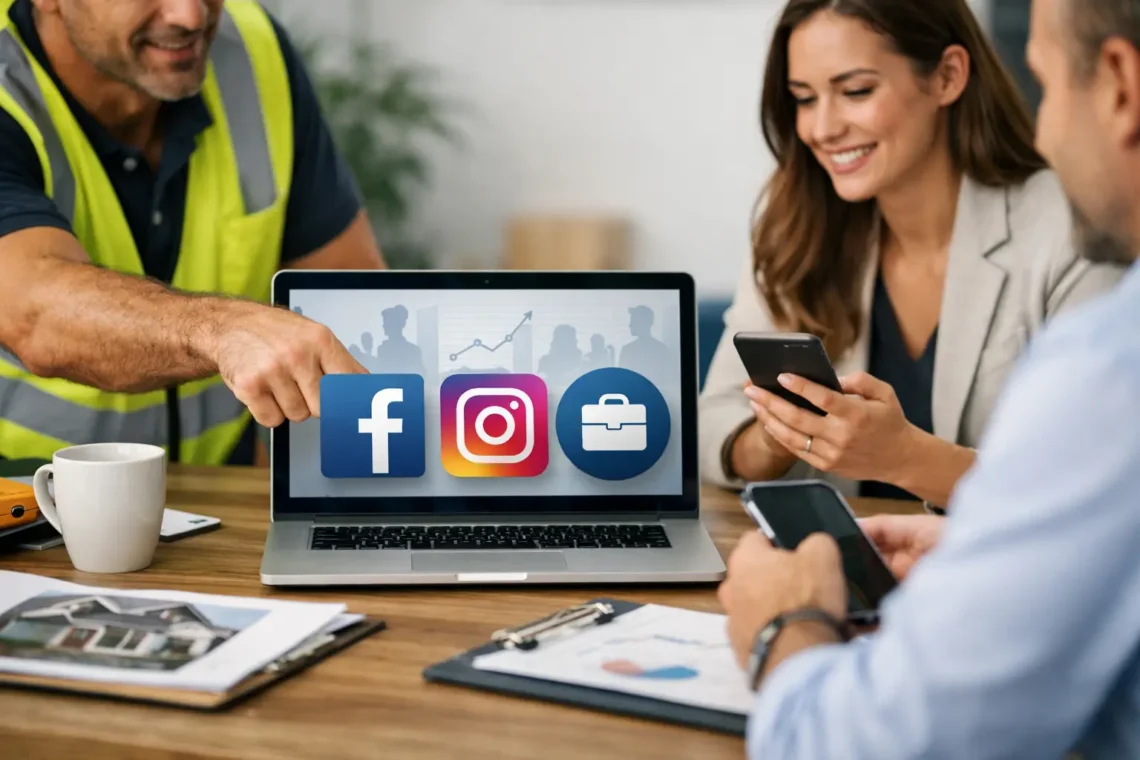
Facebook Instagram LinkedIn Strategy That Works
Most small businesses do not need to be everywhere on social media. They need a facebook instagram linkedin strategy that supports one thing – more calls, more form fills, and more booked jobs.
For a related guide, see our article on AI Marketing Strategy for Realtors.
That changes how you use each platform.
If you run an HVAC company, plumbing business, dental office, roofing company, or local real estate team, Facebook, Instagram, and LinkedIn should not all carry the same job. When business owners treat them the same, content gets posted, time gets burned, and very little happens. The fix is simple. Give each platform a clear role.
What a facebook instagram linkedin strategy should actually do
For a local service business, social media is usually not the first place a lead converts. Google search, Google Maps, referrals, and direct visits often close that gap faster. Social media helps in a different way. It builds trust, keeps your business visible, and helps people feel more comfortable calling you when they are ready.
That means your strategy should support the sales process, not replace it.
A good plan does three things. It keeps your company active in front of local prospects. It gives proof that you do real work and get real results. And it helps referral traffic convert because people check your pages before they contact you.
If someone hears about your business, looks you up, and sees stale profiles, weak content, or no activity for six months, that hurts confidence. If they see recent projects, team photos, customer wins, and helpful updates, the business feels real and established.
Give each platform one main job
This is where most businesses get stuck. They post the same thing everywhere and hope one platform carries the load.
That is usually the wrong move.
Facebook is your trust and community channel
Facebook works well for local businesses because it reaches homeowners, families, local groups, and referral networks. It is a strong place to show before-and-after work, customer feedback, team updates, community involvement, seasonal service reminders, and simple educational posts.
It is also one of the first places people check when they are deciding whether your business is legit.
Your Facebook content should make a prospect think, these people are active, local, and clearly know what they are doing.
That does not mean daily posting for the sake of posting. Two to four solid posts per week is enough for most service businesses if the content is relevant and recent.
Instagram is your proof channel
Instagram is where visual proof carries more weight. If your work can be photographed, filmed, cleaned up, repaired, installed, restored, or transformed, Instagram can help.
This matters for roofers, landscapers, remodelers, dentists, chiropractors, med spas, agents, and home service companies. Jobsite clips, short walkthroughs, team photos, project progress, and finished results work better than polished graphics.
The key is to show real work, not try to look like a lifestyle brand.
For most local businesses, Instagram should answer one question fast: can these people actually do the job well?
LinkedIn is your credibility channel
Many small business owners ignore LinkedIn because they assume it is only for corporate companies. That is a mistake.
LinkedIn is useful when your business depends on partnerships, referrals, recruiting, commercial relationships, or professional trust. A real estate team, contractor, dentist, attorney, or local business owner can use LinkedIn to stay visible with referral partners and local professionals.
It is not usually your biggest lead source for residential jobs. But it can help you stay in front of people who send business your way.
That includes brokers, property managers, insurance agents, builders, medical professionals, local business owners, and other service providers.
Your LinkedIn content should sound more professional than Instagram, but still simple. Share business updates, team growth, community work, project highlights, lessons from the field, and wins that show reliability.
Stop posting random content
Random posting is one of the biggest reasons social media underperforms.
A local business does not need more content ideas. It needs a repeatable content structure.
The easiest approach is to rotate through a few content types that directly support trust and conversion. Show completed work. Show work in progress. Show your team. Show customer feedback. Answer common questions. Share timely reminders tied to the season or service demand.
That is enough for most businesses.
An HVAC company might post an AC replacement photo, a tech at work, a customer review, and a reminder about pre-summer maintenance. A dentist might share a staff spotlight, a quick office video, a patient testimonial, and a short explanation of a common treatment. A roofer might post storm repair photos, insurance claim support info, project progress, and finished results.
Simple works.
Your content should match buying intent
Not every post needs a hard call to action. But every post should move a prospect one step closer to trusting you.
There are really three buckets that matter.
First, proof content. This includes reviews, photos, videos, finished jobs, and case-style posts. These are your strongest trust builders.
Second, authority content. This includes short explanations, common mistakes, maintenance reminders, service area updates, and answers to customer questions. This helps people feel that you know your trade.
Third, human content. This includes your staff, your process, community involvement, and day-to-day business moments. People hire people. This is especially important for local service businesses where trust matters before the first call.
If your feed is all promotions, people tune out. If it is all generic education, they forget who you are. If it is all team photos, they do not know what you actually do. Balance matters.
A practical facebook instagram linkedin strategy for small businesses
Keep this simple enough to follow every month.
Monthly planning
At the start of the month, pick 8 to 12 posts total. That is enough for most small service businesses. Pull content from recent jobs, customer feedback, team moments, and seasonal demand.
Do not create content from scratch if you already have it on your phone. Your camera roll is usually full of usable material.
Weekly posting rhythm
Post on Facebook two to three times per week. Post on Instagram two to four times per week, depending on how visual your work is. Post on LinkedIn once or twice per week if partnerships or professional visibility matter to your business.
You do not need separate ideas for every platform. You do need to adjust the angle.
A completed roofing project can become a Facebook post focused on homeowner trust, an Instagram reel showing the transformation, and a LinkedIn post about project coordination or storm response.
Same job. Different purpose.
Calls to action
Most posts should have a light next step. That might be call us, send a message, book an inspection, request a quote, or ask a question.
Keep it plain. Fancy wording usually performs worse than direct wording.
Response time
If you use social media, check messages. Fast.
A missed Facebook message or Instagram DM can be a missed job. If you cannot respond quickly, assign someone to monitor inboxes or use automation to acknowledge inquiries and route them to the right person.
What not to do
The wrong strategy is easy to spot. Stock graphics. Motivational quotes. Holiday posts with no relevance. Recycled memes. Generic advice that could apply to any business in any city.
These posts fill space, but they rarely build trust.
Another common mistake is overproducing content. You do not need a full video crew to make social media work. A clear phone video from a jobsite often outperforms polished content because it feels real.
The last mistake is expecting social media to fix weak operations. If your reviews are poor, your website is weak, or your follow-up is slow, social media will not solve the bigger problem. It works best when it supports a business that already delivers.
How to know if your strategy is working
Do not judge success by likes alone.
For local service businesses, better signs are profile visits, messages, calls, website clicks, branded search lift, and lead quality. Ask new leads how they found you. Many will say a friend referred them, then mention they checked your Facebook or Instagram before reaching out.
That counts.
Social media often assists the sale before it creates the sale.
If your pages look active, your content shows proof, and prospects are reaching out with more confidence, the strategy is doing its job.
For a business trying to grow steadily, that is the right goal. Not vanity numbers. Not random reach. Just better visibility, better trust, and more chances to turn interest into appointments.
If your current social media feels messy, start by giving each platform one clear role and posting real proof of your work. That alone can clean up a lot of wasted effort and make your marketing easier to trust.
Related resources for Tampa Bay business owners


You May Also Like
The Busy Professional’s Guide to AI-Powered Marketing Success
AI Content Creation for Listings