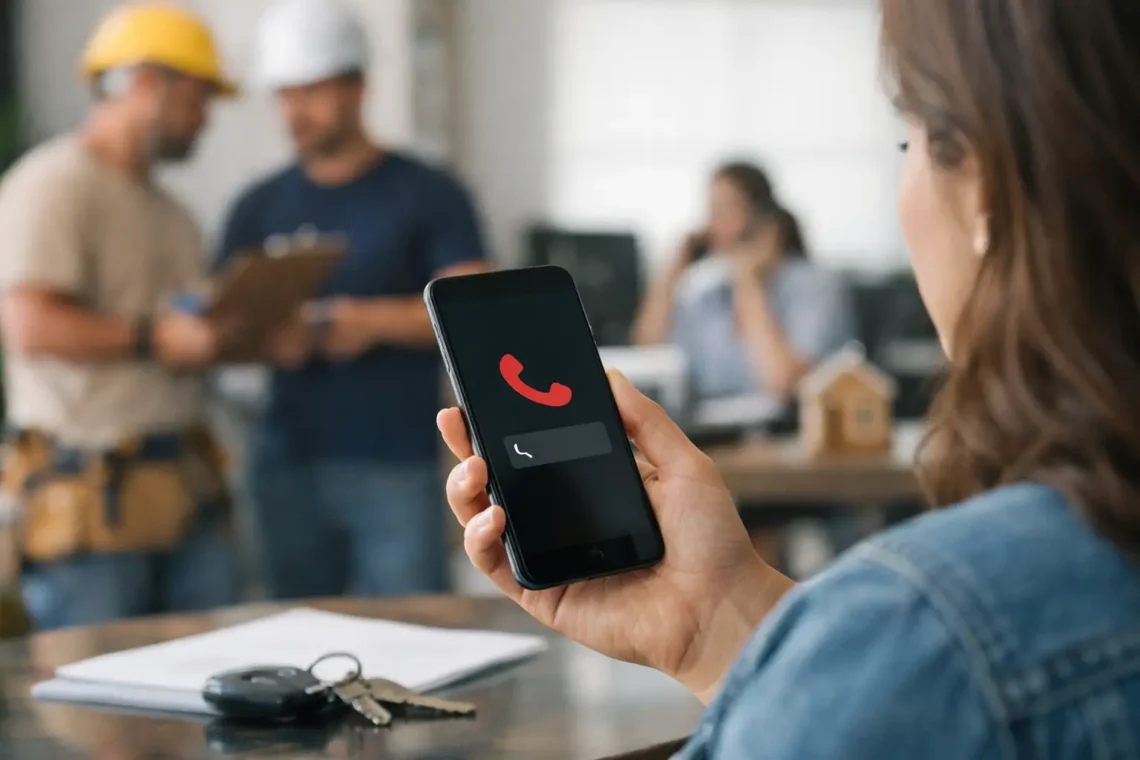
What Is Missed Call Text Back?
A missed call from a good lead can cost you real money. If you run an HVAC company, dental office, plumbing business, or real estate team, you already know this. So what is missed call text back? It’s an automated text message sent to someone right after they call your business and no one answers.
For a related guide, see our article on How to Automate Missed Call Texts.
The goal is simple. You do not let that lead go cold.
Instead of hoping they leave a voicemail or call back later, they get a fast text that keeps the conversation alive. That one step can be the difference between a booked job and a customer calling the next business on Google.
What is missed call text back and how does it work?
Missed call text back is a follow-up system tied to your business phone number. When a call comes in and is not answered, the system triggers a text message automatically. Usually, that text goes out within a few seconds.
A basic message might say, “Sorry we missed your call. How can we help?” That gives the customer an easy way to respond without waiting on hold, leaving voicemail, or trying again later.
Most setups work through your phone system, call tracking software, CRM, or lead management platform. The details depend on the tools you use, but the function is the same. A missed call triggers a text. The customer replies. Your team follows up and books the lead.
This matters most for local service businesses because many calls happen when your staff is busy, on another line, after hours, or out in the field. You are not losing leads because demand is low. You are losing them because speed matters.
Why local businesses use missed call text back
People who call a service business usually need something now. They are not browsing for fun. They may have a broken AC, a leaking pipe, tooth pain, or a roof problem after a storm. If you miss their call and stay silent, many will move on fast.
A text changes that.
It tells the customer your business is responsive, even if you could not answer in the moment. It also gives them a low-friction way to continue the conversation. A lot of people would rather send a quick text than leave a voicemail.
For small businesses, this is one of the simplest ways to save leads you are already generating. You do not need more traffic if your current calls are slipping through the cracks. You need a better follow-up process.
That is why missed call text back is often more about conversion than marketing. The lead already found you. The call already happened. The problem is what happens next.
What missed call text back is not
It is not a replacement for answering your phone.
If your business misses calls all day, every day, a text back system will help, but it will not fix the root issue. You may need better front desk coverage, call routing, or after-hours support.
It is also not meant to send long messages, sales pitches, or a full menu of services. The first text should start a conversation, not overwhelm the customer.
And it is not right for every single situation. If you handle emergency calls, legal matters, or sensitive medical issues, your wording needs to be more careful. In some cases, you may want the message to direct people to call 911, use an emergency line, or wait for a live callback.
The real business benefit
The biggest benefit is more recovered leads.
Let’s say your office misses 20 calls a week. Even if only a portion of those are real opportunities, that is still a lot of revenue at risk. A missed call text back system gives you another shot at starting the conversation before the customer disappears.
It also improves response time without adding more work in the first few seconds. Your team does not need to manually text every missed call. The system handles the first touch automatically.
That speed can improve booking rates, especially in industries where customers contact multiple businesses at once. The company that responds first often wins.
There is also a customer service angle. People want acknowledgment. A quick text says, “We saw your call, and we are here.” That alone can reduce frustration.
Who should use it?
If your business depends on inbound calls, you should at least consider it.
It makes the most sense for home service companies, contractors, real estate professionals, dental offices, chiropractors, law firms, med spas, and other local businesses where calls often turn into appointments or jobs.
It is especially useful if you have a small team. When you only have a few people answering phones, missed calls are normal. The issue is not whether they happen. The issue is whether you have a system in place after they happen.
If most of your leads come through forms, chat, or walk-ins, it may matter less. But for businesses that rely on calls from Google search, Google Business Profile, or local service ads, it can have a direct impact on revenue.
Best practices for a missed call text back message
Keep the message short. Make it sound human. Give the customer a clear next step.
A good message usually includes three things: a quick apology or acknowledgment, your business name, and a simple question or instruction. For example, “Sorry we missed your call. This is ABC Plumbing. Reply here with your issue and we’ll get back to you shortly.”
That works because it is clear and easy to answer.
What you want to avoid is a message that sounds robotic, confusing, or too aggressive. You do not need to cram in offers, service lists, or long disclaimers unless your industry requires them.
Timing matters too. The text should go out quickly. If it takes 20 minutes, the benefit drops fast.
Common mistakes that hurt results
One mistake is sending the same message to every caller without thinking through context. After-hours calls may need a different response than daytime calls. New leads may need different wording than existing customers.
Another mistake is failing to monitor replies. Automation helps with speed, but someone still needs to take over the conversation. If a customer texts back and hears nothing for an hour, the system did its part and the business still lost the lead.
Some businesses also make the message too casual or too stiff. You want simple and professional. Think like a real front desk person, not a chatbot and not a corporate legal team.
Consent and compliance matter as well. Your setup should follow texting rules and industry standards. The software you use and the way calls are handled can affect what is allowed. If you are not sure, get that checked before turning anything on.
How to know if it is working
Do not guess. Track it.
Start with basic numbers. How many calls are missed each week? How many text messages go out? How many people reply? How many of those conversations turn into booked appointments or estimates?
If you already invest in SEO, Google Business Profile optimization, or paid lead generation, this matters even more. Every missed call is a lead you paid for one way or another. Recovering even a small percentage can improve return without increasing ad spend.
Look at quality too. If people reply but do not book, the issue may be your script, your follow-up speed, or your office process. If nobody replies at all, the message may need work.
Should every business set this up?
Not automatically.
If your team answers nearly every call live, this may not move the needle much. If your customer base is older and strongly prefers phone calls over texts, results may be mixed. And if your business handles highly sensitive communication, the setup needs extra care.
But for many local businesses, the upside is strong and the barrier is low. You are not rebuilding your marketing. You are fixing one expensive leak in your lead flow.
That is the best way to think about missed call text back. It is not a flashy tactic. It is a practical tool that helps you keep more of the opportunities you already earned.
If your phone rings and nobody answers, silence costs you. A fast text gives you a second chance, and sometimes that second chance is the job.
Related resources for Tampa Bay business owners


You May Also Like
How to Turn More Leads into Jobs: A Guide to Lead Nurturing for Local Service Businesses
Affordable AI Marketing for Realtors