Small Business Marketing Trends That Matter
Most small business owners do not need more marketing ideas. They need more calls, more form leads, and more booked jobs.
For a related guide, see our article on 10 Internet Marketing Strategies to Get Your Phone Ringing.
That is why the small business marketing trends that matter right now are not flashy. They are practical. They help local service businesses show up when people are ready to hire, make it easy to reach out, and follow up fast enough to win the job.
If you run an HVAC company, roofing business, plumbing shop, dental office, real estate team, or another local service business, this is where the market is moving. Some of these shifts are new. Some have been building for years and are now too important to ignore.
Small business marketing trends are getting more local
For local businesses, broad visibility means less than local visibility with buying intent. A thousand impressions from the wrong audience will not beat ten searches from people looking for “plumber near me” or “roof repair Tampa.”
That is why one of the biggest small business marketing trends is the continued move toward local search. Google Business Profile is often the first place people decide whether to call you. Your map ranking, reviews, business categories, service areas, photos, and weekly activity all shape that decision.
The businesses getting better results are not treating their profile like a directory listing. They are treating it like a lead source. They keep hours accurate, answer questions, add fresh photos, collect reviews consistently, and make sure the profile matches the services they actually want to sell.
Organic local SEO matters too. Service pages built around high-intent searches still work because they match what people are already typing into Google. If someone needs an emergency AC repair, they are not looking for entertainment. They want a trusted option now.
Conversion is beating traffic
A lot of owners still ask the wrong question. They ask how to get more website visitors. The better question is how to get more of the right visitors to contact you.
That shift is one of the most useful trends to pay attention to. More businesses are realizing that a website is not there to impress other marketers. It is there to turn search traffic into phone calls and leads.
A conversion-focused website is simple. It loads fast. It works well on mobile. It makes your services obvious. It shows the areas you serve. It gives people a clear next step. It answers basic trust questions fast, like whether you are local, experienced, reviewed well, and easy to contact.
This does not mean every site needs to be stripped down to nothing. Some businesses need more detail because the sale has more friction. A dentist offering cosmetic treatments may need stronger service pages than a plumber offering drain cleaning. But in both cases, clarity wins.
If your site gets traffic but weak lead volume, the issue may not be rankings. It may be page structure, weak calls to action, poor mobile experience, or forms that ask for too much too soon.
Speed to lead is now part of marketing
Marketing used to stop when the phone rang or the form came in. That is no longer true.
One of the biggest changes for service businesses is that lead handling now affects marketing performance. If you miss calls, respond to forms hours later, or forget to follow up with estimates, your ad spend and SEO investment work harder than they should.
This is where automation is becoming more useful for small businesses. Not complicated systems. Just practical follow-up that keeps leads from going cold. A missed call text-back, instant form response, reminder sequence, or estimate follow-up can make a real difference.
The reason this trend matters is simple. Many local businesses are still slow. If you respond first, your chance of closing goes up. Not every lead will buy from the first company that replies, but fast follow-up creates trust and keeps the conversation moving.
There is a trade-off here. Automation should support your team, not replace real communication. People still want to talk to a person when the job is urgent or high value. The goal is not to sound robotic. The goal is to make sure no good lead gets ignored.
Reviews are doing more heavy lifting
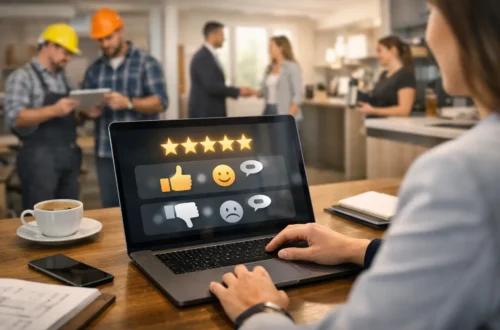
Reviews have always mattered, but they now influence more than reputation. They affect map rankings, click-through rates, and lead quality.
When someone compares three local businesses, reviews often decide who gets the call. Not just the star rating. The volume, recency, and wording matter too. A company with steady recent reviews usually looks more active and more trustworthy than a company with great reviews from two years ago.
This is especially important in crowded local markets. If two businesses offer the same service and both rank well, the one with stronger reviews often gets the lead.
The businesses getting ahead here have a system. They ask at the right time. They make it easy. They follow up. They do not wait and hope customers remember.
There is also a quality angle. Reviews that mention specific services, neighborhoods, response time, and outcomes can help both search visibility and conversion. Generic reviews are still useful, but detailed ones carry more weight with real buyers.
Content is shifting from generic to bottom-of-funnel
A lot of business content still says very little. It fills space, but it does not help someone decide.
One of the better small business marketing trends is the move away from broad, generic content and toward pages built for buying intent. Service pages, location pages, FAQ sections, and trust-building content tend to do more for local lead generation than random blog posts aimed at cold traffic.
That does not mean blogs are useless. It means the topic has to support revenue. A roofing company may benefit from content about storm damage insurance claims, roof replacement timelines, or signs of hidden leaks. Those topics connect to real jobs. A fluffy article with no buyer intent usually does not.
This is where many businesses waste time. They publish content because they were told content matters. But they never ask whether that content helps a customer take the next step.
Social proof is showing up earlier in the buying process
People used to visit a website, then look for proof. Now they often look for proof before they ever click.
That means your reviews, photos, before-and-after work, and business details need to be visible across your search presence, not just buried on your website. Google Business Profile, search results, and service pages all play a role.
For service businesses, proof does not need to be fancy. Clean job photos, real testimonials, clear service descriptions, and signs that you serve the local area well can do a lot. People want evidence that you do what you say and that you show up.
This trend matters more in categories where trust is everything, like roofing, dental care, plumbing, and real estate. If the decision feels risky, proof becomes part of the sale.
AI is becoming practical, not theoretical
A lot of AI talk is overblown. For most local businesses, the useful part is not replacing your team or writing endless content. It is saving time and improving response speed.
AI can help with lead routing, first-response messaging, review request workflows, call summaries, and follow-up reminders. Used well, it tightens the gap between inquiry and action.
Used poorly, it creates generic messaging that sounds fake and hurts trust. That is the trade-off. Small businesses should use AI where it improves speed and consistency, but keep real people involved where trust and judgment matter.
If you are wondering where to start, start with the places where leads slip through. Missed calls. Unanswered forms. Old estimates with no follow-up. That is where automation usually pays off first.
What these trends mean for your business now
If you are still relying mostly on referrals, this is the real takeaway: the businesses getting more consistent leads are building simple systems around buyer intent.
They show up in local search. They have websites that convert. They collect reviews on purpose. They respond fast. They follow up without dropping the ball.
You do not need to chase every new channel. You do not need more noise. You need a better path from search to contact to booked job.
For many local businesses, the fastest wins come from tightening what already exists. Improve your Google Business Profile. Fix weak service pages. Make your calls to action clearer. Set up follow-up for missed leads. Ask for reviews every week, not once in a while.
That is not trendy in the flashy sense. But it is what is working.
If your marketing feels inconsistent, the answer is usually not more complexity. It is better execution on the channels that already bring in buyers. The businesses that grow from here will be the ones that stay visible, respond fast, and make it easy for the right customer to say yes.
Related resources for Tampa Bay business owners


You May Also Like

Facebook Ads for Small Business Leads That Work

How to Fix Low Quality Leads Fast