Blogging In Digital Marketing: Your Local Business Lead Generation Guide
For Tampa Bay business owners exploring this topic, see our Digital marketing for Tampa Bay businesses page.
Are you tired of pouring money into ads that don’t make the phone ring? As an HVAC, roofing, or plumbing business owner, you need qualified local leads, not just website clicks. Blogging in digital marketing isn’t about writing an online diary; it’s a strategic weapon. Implemented correctly, it turns your website from a silent online brochure into a 24/7 lead generation machine that brings in customers who are ready to hire you. This is your playbook for getting real results in your service area.
Why Your Current Marketing Isn’t Working

Let’s cut the fluff. As a local service business owner, you need your phone to ring with qualified leads—not just a spike in website traffic from curious homeowners. The hard truth is that most digital marketing feels like a gamble where you spend your hard-earned money with no guaranteed return. This guide will fix that.
We’re going to show you exactly how to use a blog to attract the specific homeowners and property managers you serve, whether you’re a plumber in Dallas or a roofer in Fort Worth.
The Problem with Interrupting Customers
Traditional ads—billboards, radio spots, even most social media ads—interrupt people. They shout for attention from an audience that probably isn’t looking for a new roof or an emergency plumber right now.
A strategic blog does the exact opposite. It provides answers at the precise moment a local customer is searching for a solution you offer. This is the core of all effective lead generation strategies for small businesses that focus on pulling in customers who are already raising their hands for help.
Your website should be your best salesperson, working tirelessly around the clock. Your blog is the fuel that powers it, turning a Google search into a booked appointment.
What This Guide Delivers
This is a direct, step-by-step playbook. By the end, you will have a clear, repeatable process for creating blog content that drives real business goals.
- Rank on Google for Local Searches: We’ll show you how to target the exact phrases your customers are typing, like “emergency AC repair in Tampa.”
- Become the Go-To Expert: You’ll build unbreakable trust by providing genuinely helpful information, not just a sales pitch.
- Generate Qualified Leads: Every article will be structured to guide readers toward calling you or requesting a quote.
How Blogging Becomes Your Local Lead Engine
Let’s get straight to it. If your local business has a website but no blog, you are invisible to your most valuable customers—the ones searching online for your services right now. A website without a blog is a silent storefront; it exists, but it isn’t actively pulling people inside. Blogging in digital marketing is the engine that turns your website into a powerful magnet for local leads.
Think of it like this: your main service pages (“Roof Replacement,” “Drain Cleaning”) are digital billboards. They state what you do. A blog post, on the other hand, is a helpful conversation with a potential customer who has a specific problem, like a leaky faucet or a storm-damaged roof.
Every article you publish is another chance for a local homeowner to find you when they turn to Google with a question. That’s how you win the local search game without a massive ad budget.
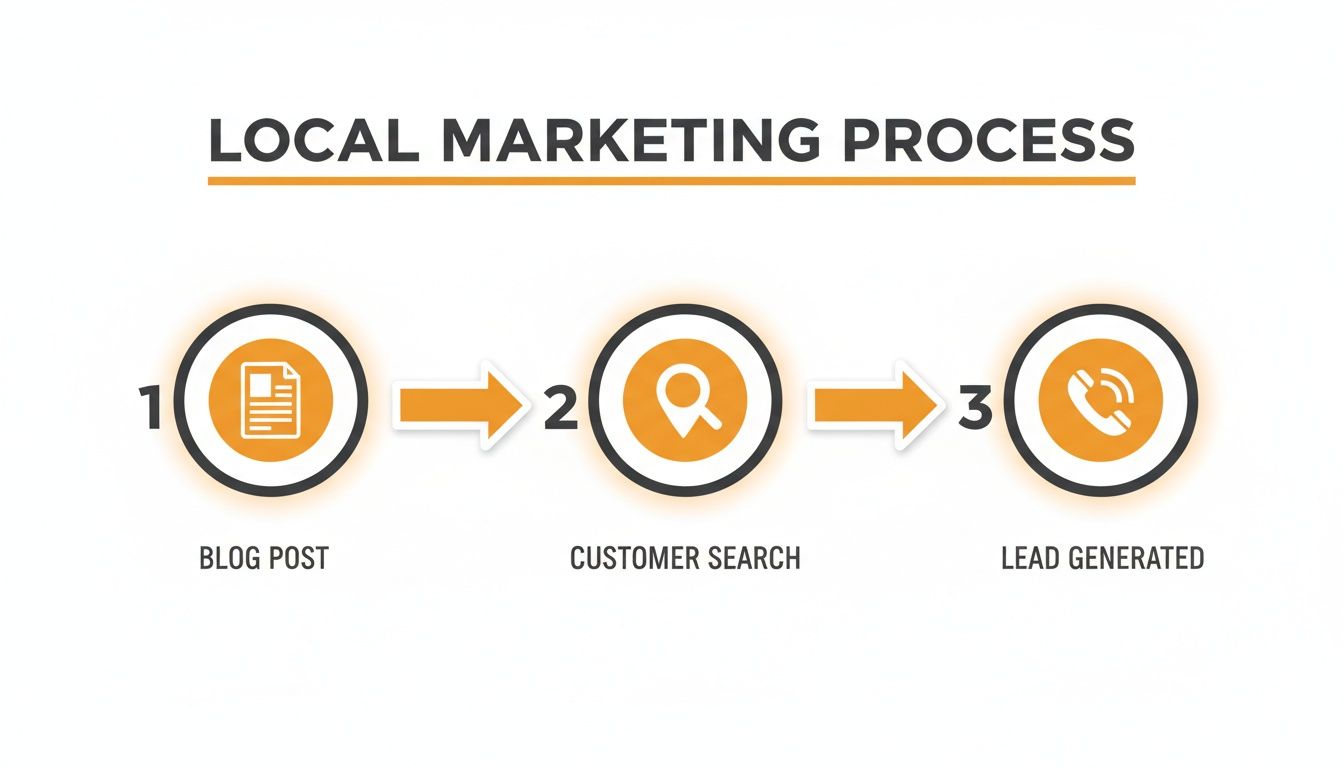
From Invisible to In-Demand on Google
Google rewards websites that are helpful and packed with relevant information. A simple five-page website for your Tampa roofing company is a start, but it’s a tiny target for search engines to hit.
Now, imagine that same website with 50 blog posts answering real customer questions like, “How to spot roof storm damage in Florida.” It suddenly becomes a huge, impossible-to-miss local resource.
The numbers don’t lie. Websites with blogs have 434% more indexed pages and 97% more inbound links, making them incredibly attractive to search engines. You can see more data on how this translates to real growth with these key digital marketing statistics. Each blog post you publish creates a new “digital doorway” to your business. The more doorways you have, the more local customers will walk through them.
Build Authority That Pre-Sells Your Services
Blogging does more than get you found on Google. It positions you as the expert people can trust in your service area.
When a homeowner in St. Pete reads your detailed guide on “Choosing the Right HVAC System for Humid Climates,” you’re no longer just another contractor. You’re the authority who just gave them fantastic advice, for free. That trust pre-sells your services before you even answer the phone. You’re not a cold call; you’re a trusted resource.
- Answer Specific Questions: Write posts that solve problems your neighbors are actually facing, like “DIY fixes for low water pressure in older Clearwater homes.”
- Showcase Your Expertise: Your knowledge is your best marketing tool. Use it to break down complex topics and build your reader’s confidence in you.
- Drive High-Intent Traffic: People who find you through a helpful article are looking for a solution and are much closer to making a hiring decision.
This entire approach is the foundation of an affordable SEO for small business strategy because it focuses on creating lasting value, not just renting temporary space with ads.
The 3-Step Blueprint for Local Lead Generation Blogging
Tired of marketing that feels like guesswork? Let’s walk through the exact, repeatable process for turning your service business blog into a machine that brings in local leads. This isn’t abstract theory; it’s a practical framework for using blogging in digital marketing to get your phone ringing with customers right in your service area.
Step 1: Find Keywords That Signal Purchase Intent
A keyword is just a phrase your ideal customer types into Google when they have a problem you can solve. The trick is to find the phrases that scream, “I need a professional, now!” Put yourself in a local homeowner’s shoes.
What would they actually search for?
- Emergency Intent: “emergency roofer in Tampa” or “24-hour plumber near me.”
- Problem-Specific: “best electrician for old homes in St. Petersburg” or “leaking AC unit in attic Clearwater.”
- Cost-Related: “how much does a new roof cost in Florida” or “sewer line repair cost Tampa.”
These phrases are gold because they reveal precisely what your customers are struggling with. While tools like Google Keyword Planner can provide data, your best ideas will come straight from your own client conversations.
Step 2: Create a Simple Content Calendar
Once you have a list of keywords, organize them into a content calendar. This eliminates the “what should I write about?” paralysis and ensures consistency. A simple spreadsheet is all you need.
For every article, your calendar should answer four questions:
- Target Keyword: e.g., “hard water solutions Tampa”
- Blog Post Title: e.g., “A Tampa Plumber’s Guide to Fixing Hard Water Problems For Good”
- Customer Pain Point Solved: e.g., scale buildup on fixtures, dry skin, appliance damage.
- Publish Date: e.g., October 15th
This simple structure builds a pipeline of content that speaks directly to real-world customer issues. If you want to go deeper on this, check out our complete content generation strategy guide.
Step 3: Nail the On-Page SEO Basics
On-page SEO is just how you make it crystal clear to Google what your article is about. Getting these basics right is non-negotiable if you want to rank.
- Headings: Put your main keyword in your main title (the H1). Use variations in your H2 and H3 subheadings. This creates a clear hierarchy for Google and your reader.
- Meta Description: This is the 155-character blurb under your title on Google. Write something compelling that includes your keyword and a reason to click.
- Image Naming: Don’t just upload
IMG_1234.jpg. Name your image files with your keyword (likeemergency-roofer-tampa-fl.jpg) and write a simple, descriptive alt text. This is a great way to show up in Google Image searches.
Creating Blog Content That Actually Converts
Generic, fluffy articles won’t convince a homeowner to call you for an HVAC emergency. Your blog posts must speak directly to their real-world problems and the unique challenges of your service area. This is where blogging in digital marketing stops being about filling a page and starts generating business.
Actionable Step: Write for Local Intent
A blog post titled “5 Tips for Plumbers” does nothing for your bottom line. Other plumbers read that, not a family with a backed-up drain. Your content must be so dialed-in to your service area that it couldn’t be for anyone else.
Think about the specific pain points your local customers face.
- For a Tampa roofer: Write “What Type of Roof Is Best for Florida’s Hurricane Season?” This targets a high-stakes, local concern.
- For a Phoenix plumber: “Hard Water Solutions for Phoenix Homes” hits a common, frustrating issue specific to that region.
- For a Denver dentist: “What to Do During a Dental Emergency in Denver” provides urgent, location-based advice.
These topics work because they answer a high-intent question with a localized solution. A great local blog post makes a potential customer think, “This company gets it. They work here. They know my problem.” That’s the moment a reader turns into a lead.
Real Examples: Local Service Blog Post Ideas
| Industry | Generic Topic (Low Intent) | Strategic Local Topic (High Intent) |
|---|---|---|
| HVAC | “How an Air Conditioner Works” | “Is Your AC Unit Ready for a Tampa Summer? A 5-Point Checklist” |
| Plumbing | “Fun Facts About Pipes” | “Sewer Backup Signs: A Guide for Dallas Homeowners” |
| Roofing | “Different Types of Shingles” | “Hurricane-Proofing Your Roof: A Guide for Pinellas County Homes” |
| Dentistry | “Why You Should Floss” | “How Much Do Dental Implants Cost in Austin, TX?” |
| Real Estate | “Tips for Buying a Home” | “First-Time Home Buyer Mistakes to Avoid in the Phoenix Market” |
Notice the pattern? The strategic topics solve a problem tied directly to a place. That’s what gets the phone to ring. You don’t have to reinvent the wheel every time, either. To keep your content calendar full, turn your podcasts into blog posts and get your expertise in front of an audience that prefers to read.
Promoting Your Content to Dominate Local Search
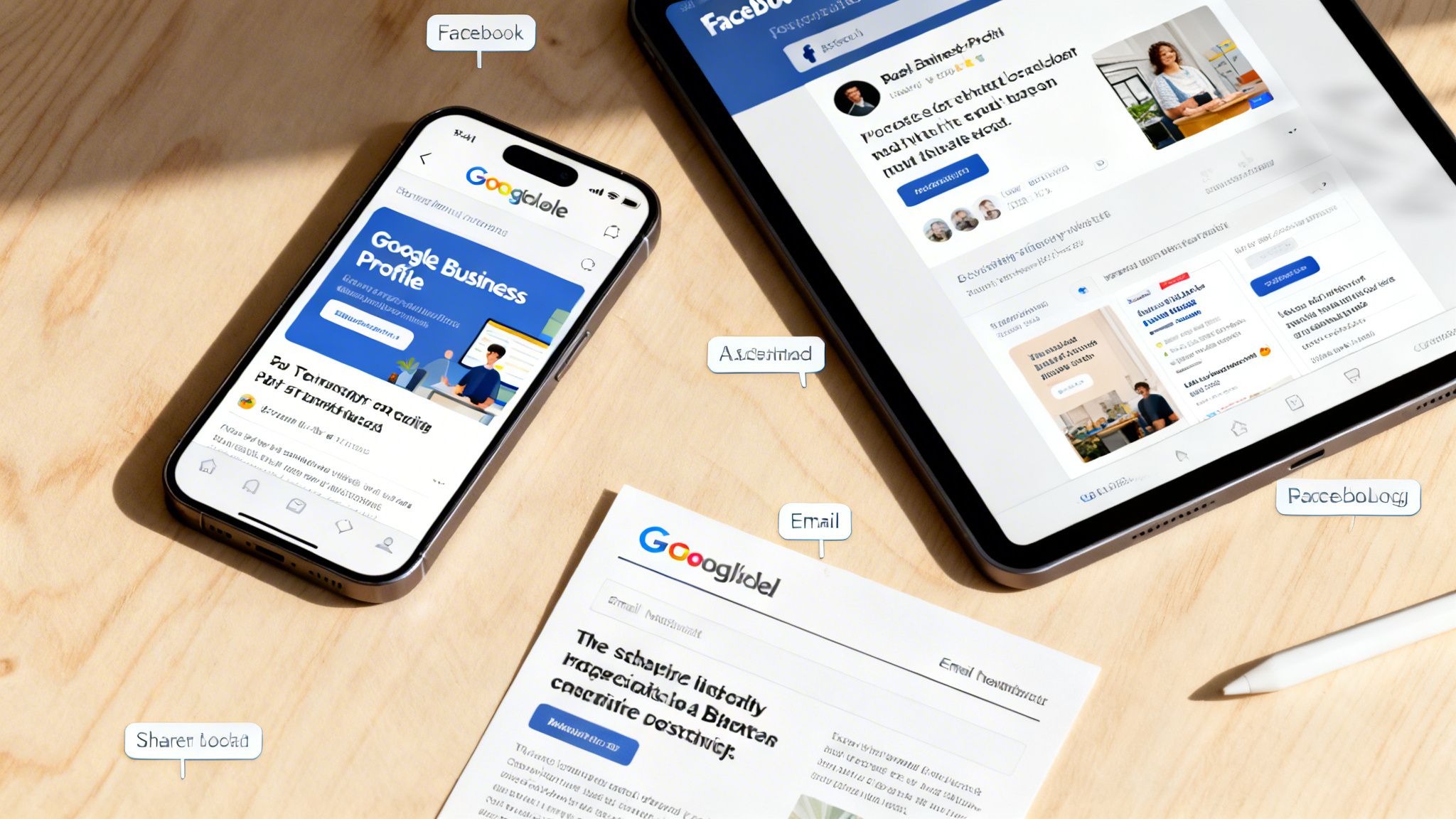
Hitting “publish” is the starting line, not the finish. A brilliant article that nobody reads is digital clutter. Your promotion strategy is just as critical as the writing itself. The good news? You don’t need a massive budget. You just need a smart, focused plan to make your blogging in digital marketing efforts pay off.
Actionable Step: Your 3-Step Local Promotion Plan
To make an impact in your service area, focus your energy on these three channels. This simple process connects your content with people actively looking for you.
- Google Business Profile: This is your most powerful free tool for local promotion. As soon as your article is live, create a GBP “Update.” Post a great picture, write a quick teaser about the problem your article solves, and link directly to the new post. This puts your content right in the search results for local customers.
- Social Media Repurposing: Don’t just drop a link on Facebook. Pull out the most valuable tips from your article and turn them into several bite-sized posts. For a blog about “Hurricane-Proofing Your Roof,” share a 3-point checklist graphic or a quick video tip. Always link back to the full article.
- Strategic Internal Linking: This is the step most businesses skip. Go to your most important service pages—like “Roof Repair” or “AC Installation”—and find a natural place to link to your new blog post. For instance, on your “AC Installation” page, you might add: “Not sure which unit is right for you? Read our guide on choosing the best AC for a Tampa home.” This builds a web of information that Google loves, making your whole site stronger.
Think of internal links as pathways you build through your website. They guide customers and Google to your most valuable content. Linking from a blog post to a service page is good, but linking from core local SEO service pages to helpful blog posts builds topical authority and keeps visitors on your site longer.
FAQ: Your Blogging Questions Answered
We talk to local service business owners every day. Here are the most common questions they ask about using blogging in digital marketing to get leads.
1. How often should I blog to see results?
Consistency matters more than frequency. Aim for one high-quality, in-depth post every two weeks. A steady rhythm shows Google you’re active and consistently providing helpful content. This pace is realistic for a busy contractor and builds a powerful library of resources over time without causing burnout.
2. What is a realistic ROI for blogging?
Blogging is a long-game strategy that builds a lasting asset. You will likely see traffic and keyword rankings start to climb within 3-6 months, but the significant return on investment (ROI) usually kicks in after 6-12 months of consistent effort. This ROI includes better rankings for your service pages, stronger brand authority, and a digital asset that generates leads for years, costing far less than paid ads.
3. How can I create good content if I’m not a writer?
You don’t have to be a great writer. You just have to be a great plumber, electrician, or roofer. Your hands-on expertise is what customers are looking for. Stop trying to “write” and start “explaining.” Talk to the reader like you would explain a problem to a customer in their kitchen. Use a direct tone, short sentences, and bullet points. If you don’t have the time, a partner can build out your content strategy and handle the writing for you.
Stop Chasing Leads. Let Them Come to You.
You now have the blueprint to turn your website into a lead generation asset. You know why blogging in digital marketing is so powerful and have the exact steps to plan, write, and promote content that gets results for your local service business.
But knowing what to do and having the time to do it are two different things.
If you’re ready to implement this strategy but need an expert team to handle the heavy lifting, we’re here to help. Our team can build and execute this entire system for you—from keyword research to content promotion. You focus on running your business; we’ll make sure the right customers find you.
Let’s make your phone ring. Book a no-obligation strategy call with Spark Hive at sparkhive.agency to get started.
Related resources for Tampa Bay business owners


You May Also Like

How to Set Up Missed Call Automation Fast

Best Website Features Contractors Need for More Calls